
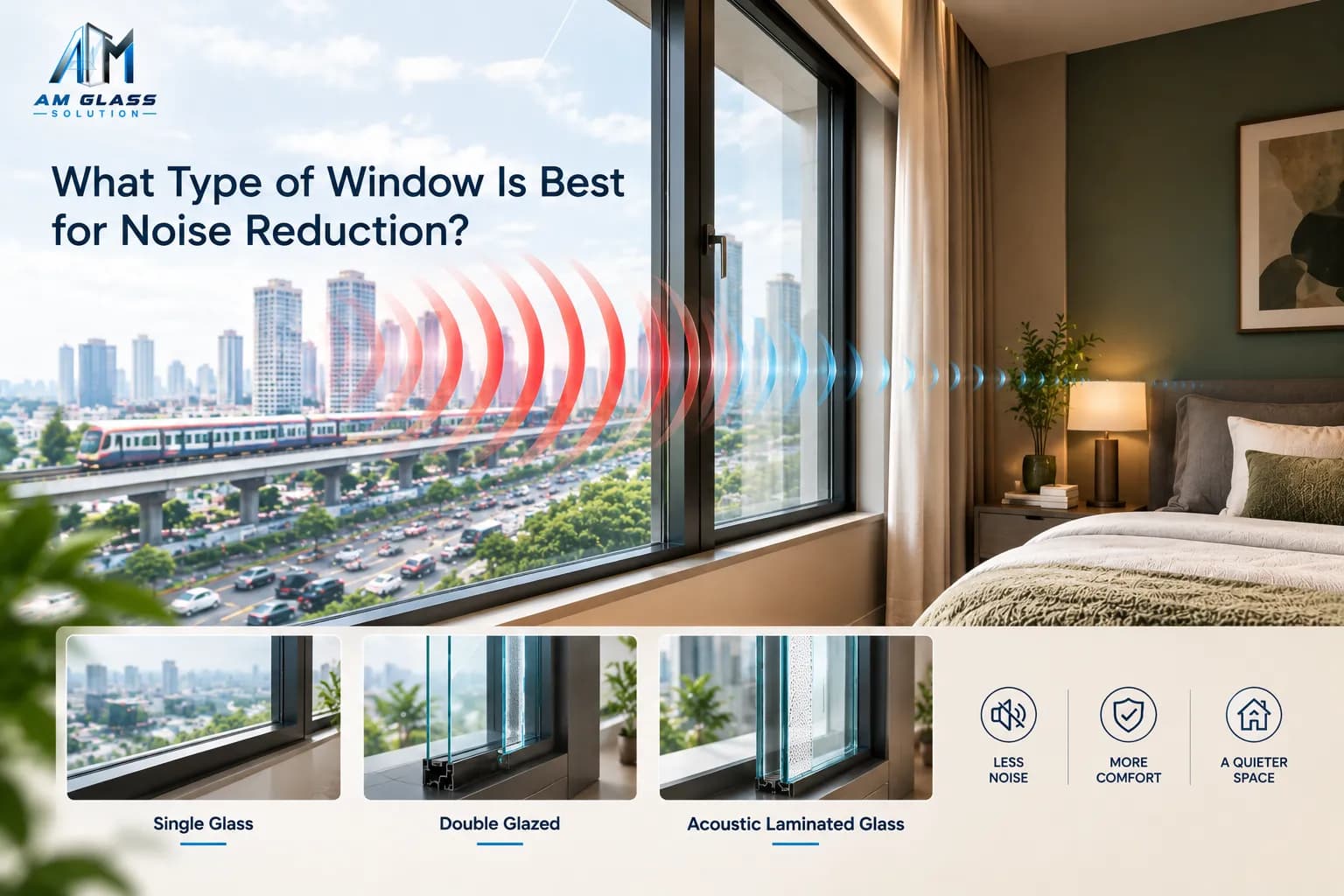
What Type of Window is Best for Noise Reduction in SG?
Choosing the right window for noise reduction is not simply about selecting the thickest glass or the most expensive window.
The glass, window design, frame, seals, air gaps and installation can all influence how much outside sound enters a room.
For homes and offices in Singapore, the right window solution can also depend on the source of the noise. Traffic, MRT activity, construction, aircraft, machinery and neighborhood noise can have different acoustic characteristics.
Singapore's HDB guidance recognizes several common window types, including casement, sliding and louvred windows, while also requiring window installation and replacement works to comply with applicable safety requirements of Housing & Development Board .
WHICH WINDOW IS BEST FOR NOISE REDUCTION?
There is no single window type that is automatically the best for every property.
A well-sealed window combined with suitable acoustic glazing can provide effective noise reduction. Casement windows, double-glazed systems, acoustic laminated glass and secondary glazing can all be considered depending on the building and noise problem.
The more useful question is:
Which window and glass configuration is suitable for my specific noise problem?
A window should be evaluated as a complete system rather than judging the glass or opening style by itself.
CASEMENT WINDOWS FOR NOISE REDUCTION
Casement windows are hinged windows that open by pivoting from the side.
Because the window sash closes against the frame, the design can provide a strong sealing arrangement when properly installed.
This can be useful for rooms where air leakage and outside noise are concerns.
Casement windows may be considered for:
• Bedrooms
• Home offices
• Study rooms
• Meeting rooms
• Apartments facing busy roads
• Noise-sensitive rooms
However, the window type alone does not determine acoustic performance. The glass, frame, seals, hardware and installation also need to be considered.
For HDB flats, homeowners should also check the applicable window requirements before replacing or modifying windows. HDB states that window installation and replacement works must comply with its safety requirements and that approved window contractors are required for relevant works. Housing & Development Board
SLIDING WINDOWS FOR NOISE REDUCTION
Sliding windows move horizontally along tracks.
They are popular because they are practical and can work well where space is limited.
However, the sealing arrangement is particularly important.
A standard sliding window may have a different sealing mechanism from a casement window. Therefore, choosing an acoustic sliding window should involve looking at the glass, frame, seals and closing system together.
A properly designed sliding window can still be part of an effective noise-reduction solution.
For HDB properties, the permitted window configuration and replacement requirements should be checked before carrying out the work. HDB specifically identifies sliding windows as one of the recognised window types and provides requirements for certain replacement works. Housing & Development Board
DOUBLE-GLAZED WINDOWS
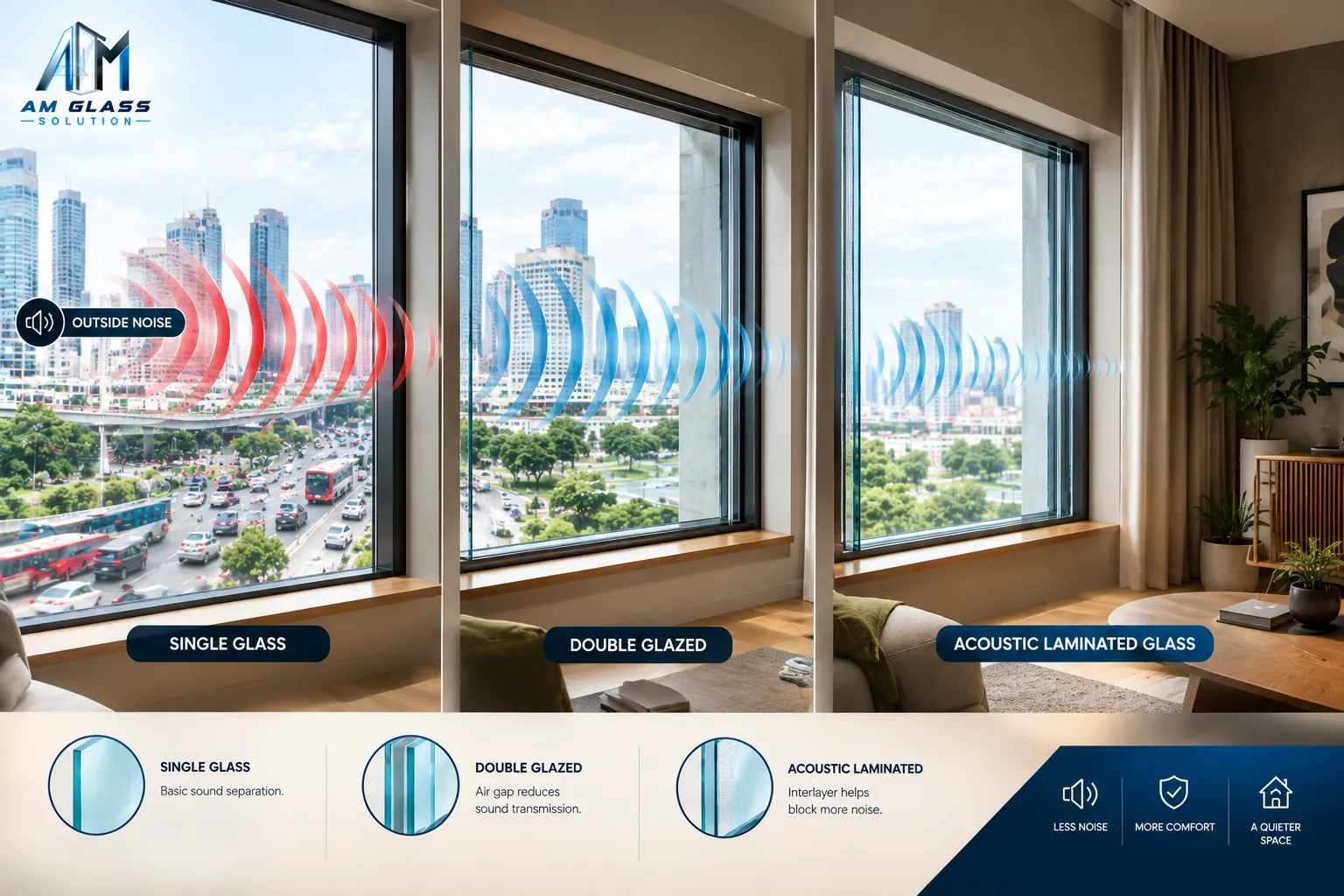
Double-glazed windows contain two panes separated by a cavity.
The space between the panes provides physical separation and can contribute to insulation.
In acoustic applications, the configuration of the panes, their thicknesses and the cavity can influence the overall result.
Double glazing does not automatically mean maximum sound reduction.
For a noise-control application, it is important to consider:
• Glass type
• Glass thickness
• Air gap
• Laminated construction
• Frame
• Seals
• Installation quality
Insulated glazing commonly refers to systems containing two or more panes separated by a space. Different glass configurations can be used depending on the intended performance. Wikipedia
ACOUSTIC LAMINATED GLASS WINDOWS
Acoustic laminated glass is designed to improve sound insulation compared with ordinary monolithic glass of the same thickness.
Laminated glass contains multiple glass layers bonded with an interlayer. The interlayer can help damp vibrations and improve sound attenuation.
Wikipedia's overview of laminated glass notes its use for improving the sound insulation rating of windows and explains the role of interlayers in sound attenuation. Wikipedia
Acoustic laminated glass can be considered for:
• Residential windows
• Office windows
• Meeting rooms
• Commercial buildings
• Bedrooms
• Noise-sensitive spaces
For properties exposed to significant external noise, acoustic laminated glass can form an important part of the overall window specification.
DOUBLE GLAZED + ACOUSTIC GLASS
For projects with stronger acoustic requirements, acoustic laminated glass can be incorporated into an insulated glazing system.
This combines several principles:
Glass layers + acoustic interlayer + air space + sealed frame
The exact configuration should be selected according to the noise source and required acoustic performance.
A system combining laminated glass and insulated glazing can be considered where the project requires both acoustic and other glazing performance characteristics.
TRIPLE-GLAZED WINDOWS
Triple glazing contains three glass panes and two cavities.
Having an additional pane can provide another layer of separation, but more panes do not automatically guarantee better noise reduction.
The acoustic result can depend on:
• Glass thickness
• Glass type
• Interlayer
• Cavity dimensions
• Frame design
• Seals
• Installation
For this reason, triple glazing should be compared with a properly designed double-glazed acoustic system rather than selected simply because it has more glass.
SECONDARY GLAZING FOR EXISTING WINDOWS
If replacing the entire window is not practical, secondary glazing may be another option for some properties.
Secondary glazing involves adding another glazing layer to the existing window arrangement.
The additional separation can help improve acoustic performance in suitable situations.
However, the existing window condition, available space, frame design and required acoustic performance should be assessed first.
This approach can be particularly relevant when a homeowner wants to improve an existing window without completely removing the original window.
WHY WINDOW FRAME AND SEALS MATTER
Many people focus only on the glass.
But a sound-reduction window is a complete system.
Sound can potentially pass through weak points such as:
• Gaps around the frame
• Damaged seals
• Poorly fitted joints
• Loose window panels
• Air leakage
• Poor installation
This means installing high-performance glass into a poorly sealed frame may not deliver the expected overall result.
The window should therefore be assessed as a complete assembly.
WHAT TYPE OF WINDOW IS BEST FOR TRAFFIC NOISE?
Traffic noise can include different frequencies from cars, buses, trucks, motorcycles and other road activity.
For this type of environment, an appropriate solution may combine:
• Acoustic laminated glass
• Multiple glass layers
• Suitable air spacing
• Effective seals
• Properly designed frames
• Professional installation
The actual noise source should be assessed before selecting the glazing specification.
A thicker pane is not automatically the complete answer.
WHAT TYPE OF WINDOW IS BEST FOR MRT NOISE?
MRT and railway environments can expose buildings to different types of transportation noise.
If your property is close to an MRT line or railway, the window should be evaluated according to the actual noise conditions.
Acoustic laminated glass and insulated glazing may be considered as part of a wider noise-control solution.
It is also important to remember that noise may enter through other parts of a room, including doors, walls, ventilation openings and poorly sealed areas.
Replacing one window may therefore not eliminate all external noise.
WHAT TYPE OF WINDOW IS BEST FOR BEDROOMS?
Bedrooms often require greater attention to noise because unwanted outdoor sound can affect comfort and sleep.
A well-sealed window with appropriate acoustic glazing can be considered where external noise is a significant concern.
Casement windows may be suitable where strong compression sealing is desired, while acoustic sliding systems or secondary glazing may be appropriate in other situations.
The choice should consider:
• Existing window type
• Noise source
• Glass specification
• Frame condition
• Available space
• Ventilation requirements
• Building restrictions
WHAT TYPE OF WINDOW IS BEST FOR AN HDB FLAT?
There is no universal HDB window solution because different flats can have different existing configurations and applicable requirements.
Possible approaches may include:
• Acoustic laminated glass
• Suitable double glazing
• Secondary glazing
• Acoustic sliding windows
• Approved replacement window systems
However, HDB renovation and window requirements must be checked before carrying out replacement or modification work.
HDB states that relevant window installation and replacement works in HDB flats must be carried out by a BCA-approved window contractor listed with HDB, with applicable permit and safety requirements. Housing & Development Board
HDB — Window Works & Maintenance Guidelines
CAN THICKER GLASS REDUCE MORE NOISE?
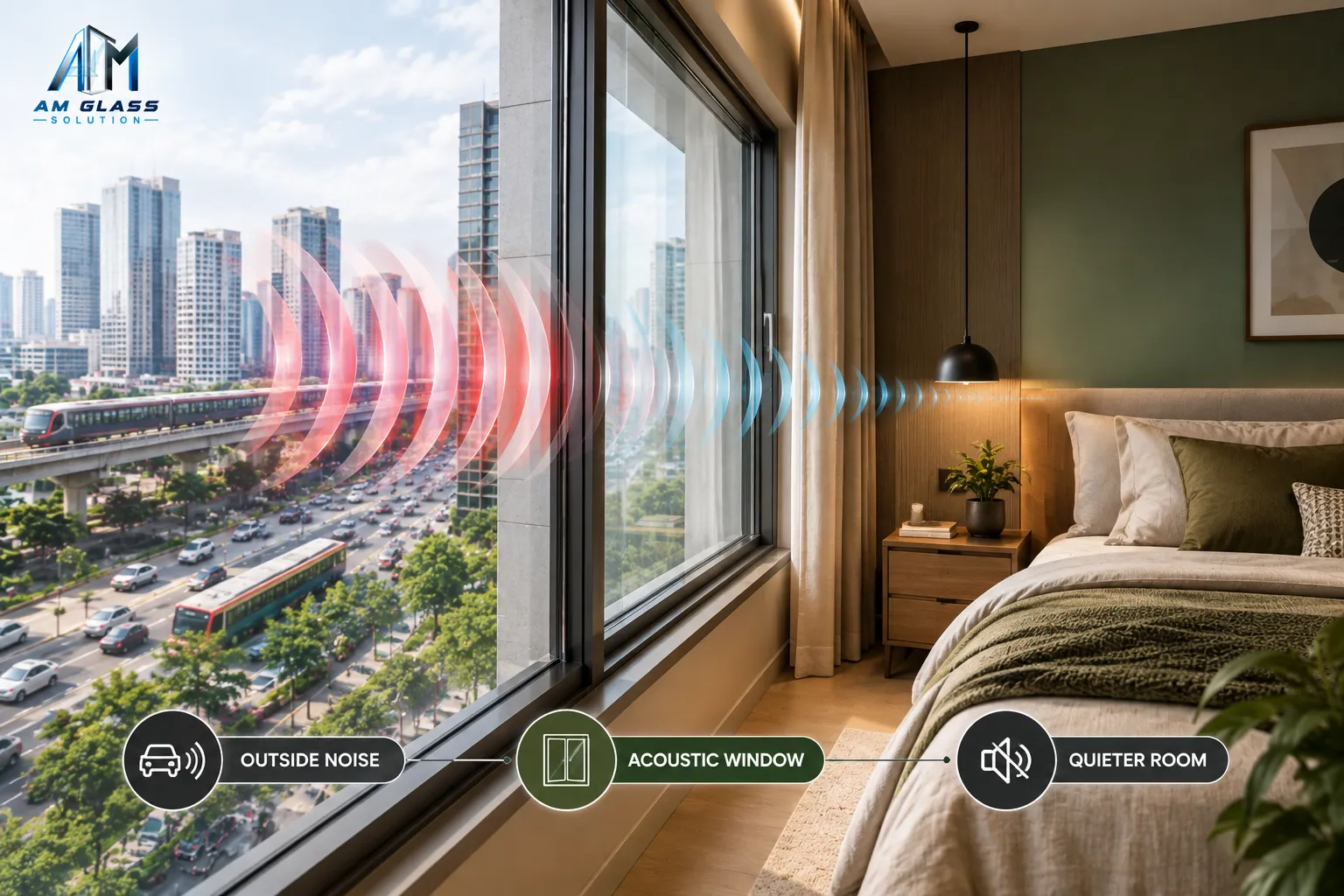
Glass thickness can influence acoustic performance, but thickness alone does not determine the result.
Laminated construction, interlayers, pane thickness combinations, air gaps, frames and seals can all affect the overall performance of a window.
This is why choosing the thickest available glass is not necessarily the correct approach.
IS DOUBLE GLAZING BETTER THAN ACOUSTIC GLASS?
These terms describe different aspects of a glazing system.
Double glazing generally refers to a system containing two panes separated by a cavity.
Acoustic glass refers to glass designed to improve sound insulation, often using laminated construction and a suitable interlayer.
A glazing system can therefore combine double glazing and acoustic laminated glass.
The appropriate choice depends on the project requirements.
CAN EXISTING WINDOWS BE MADE MORE SOUNDPROOF?
In some situations, existing windows can be upgraded.
Potential approaches include:
• Secondary glazing
• Glass replacement
• Acoustic laminated glass
• Improved seals
• Replacement window systems
The correct option depends on the existing frame, window condition and available space.
A professional assessment can help determine whether upgrading the existing window or replacing it is more appropriate.
WINDOW SAFETY AND HDB REQUIREMENTS
Noise reduction should not be considered separately from window safety.
HDB advises homeowners to check their windows regularly and states that windows must be maintained to comply with applicable Building Control Regulations. It also advises engaging a BCA-approved window contractor listed with HDB for relevant repair and replacement works. Housing & Development Board
For HDB renovation projects, homeowners should check the latest requirements before changing window designs or replacing existing windows.
This is particularly important because HDB specifies requirements for different window types and certain replacement situations. Housing & Development Board
AM GLASS SOLUTION FOR NOISE REDUCTION WINDOWS IN SINGAPORE
Choosing a noise-reduction window requires more than selecting a product based on its name.
The existing window, noise source, glass configuration, frame, seals and installation should all be considered.
For Singapore homes, offices and commercial spaces, AM Glass Solution provides soundproof glass solutions designed around different applications.
If your property is affected by traffic, MRT, construction or general outdoor noise, the appropriate acoustic glazing solution should be assessed according to the actual project requirements.
Learn more about our Soundproof Solutions:
FINAL THOUGHTS
So, what type of window is best for noise reduction?
There is no universal best window.
Casement windows can provide strong sealing. Double glazing can provide additional separation. Acoustic laminated glass can improve sound insulation. Secondary glazing can create another layer for suitable existing windows.
The important point is to look at the complete window system rather than one component.
For Singapore properties exposed to traffic, MRT, construction or other outdoor noise, the right solution should be selected according to the noise source, existing window, glass specification, frame, seals and installation requirements.
The goal should not simply be to choose a “soundproof window.”
The goal is to choose the right acoustic window system for the actual noise problem.
FREQUENTLY ASKED QUESTIONS
What type of window is best for noise reduction?
A properly sealed window using suitable acoustic glazing can provide effective noise reduction. Casement, sliding, double-glazed and acoustic laminated systems can all be considered depending on the application.
Are casement windows better for soundproofing?
Casement windows can provide strong sealing because the sash closes against the frame. However, the glass, frame, seals and installation also influence the final acoustic performance.
Are sliding windows good for noise reduction?
Yes, a properly designed sliding window can provide noise reduction. The glass, frame, tracks and sealing system should be considered together.
Is acoustic glass better than normal glass?
Acoustic laminated glass is specifically designed to improve sound insulation compared with ordinary monolithic glass of the same thickness. Wikipedia
Is double glazing good for soundproofing?
Double glazing can contribute to sound reduction because the two panes are separated by a cavity. The actual performance depends on the complete glazing configuration.
Is triple glazing better than double glazing for noise?
Not automatically. Three panes provide another layer of glazing, but glass type, thickness, cavities, frame and seals all affect acoustic performance.
Can I soundproof my existing windows?
Depending on the existing window, options such as secondary glazing, acoustic glass replacement or upgraded seals may be possible.
What is the most important part of a soundproof window?
There is no single component that determines performance. Glass, frame, seals, air gaps and installation work together as one acoustic system.