How to Soundproof Existing Windows Without Replacing Them?
Can You Soundproof Existing Windows Without Replacing Them?
Yes, in some situations an existing window can be improved without replacing the complete window system.
The first step is to identify how sound is entering the room.
Possible issues include:
• Gaps around the frame
• Worn or damaged seals
• Windows that do not close tightly
• Weak points around joints
• Existing glazing that provides limited acoustic separation
• Sound entering through another part of the room
If the existing frame is still in suitable condition, improving the sealing or adding another acoustic layer may be worth considering.
However, an upgrade should not be treated as a guaranteed solution for every property.
Why Existing Windows Can Let in So Much Noise
A closed window does not automatically mean it is an effective acoustic barrier.
Even small openings can provide a route for outside sound. If the window has worn rubber seals or does not close properly, traffic noise may continue entering the room.
The glass itself is also important.
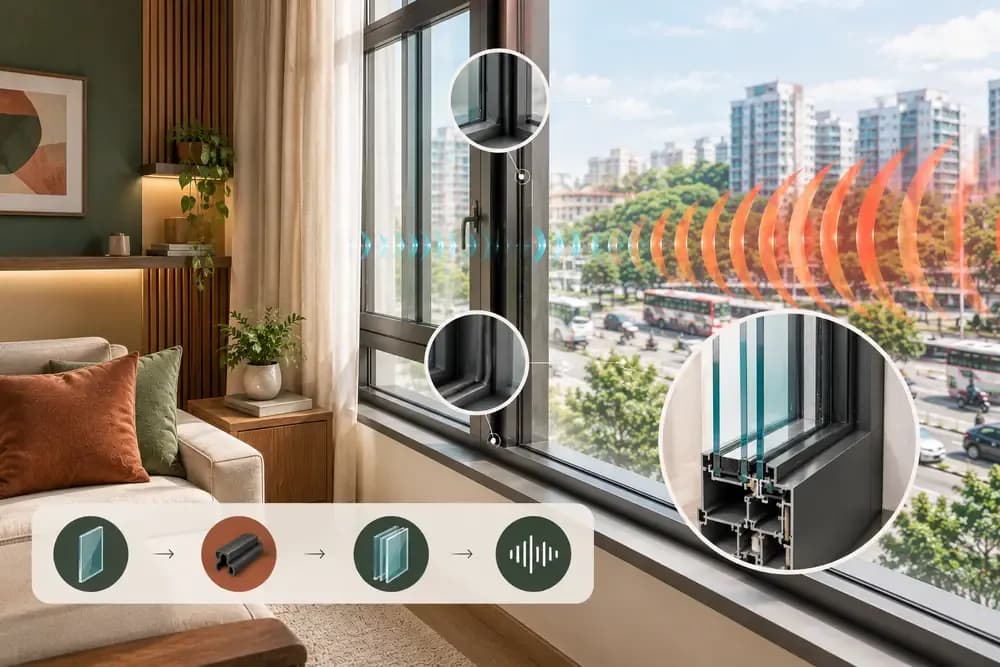
Standard single glazing may provide basic separation from outdoor sound, while laminated or acoustic laminated glass can be considered when improved sound attenuation is required.
But the glass should always be considered together with the frame and seals.
A technically good piece of glass cannot compensate for significant gaps elsewhere in the window system.
Start With the Window Seals
One of the simplest areas to inspect is the existing seal.
Over time, seals can become compressed, worn, damaged or less effective. This can affect both the general performance and the acoustic separation of the window.
Check for These Problems
• Cracked or damaged seals
• Visible gaps
• A window that feels loose when closed
• Air movement around the frame
• Noticeably stronger outside noise around the window edges
Improving the seals may help where leakage around the window is part of the problem.
However, seal replacement should be treated as one part of an overall assessment rather than a universal soundproofing solution.
Improve How the Window Closes
The way a window closes can affect how effectively it seals.
A window that is misaligned or does not close firmly may leave small openings around the perimeter.
Areas to Check
• Window alignment
• Handles and locking mechanisms
• Sliding tracks
• Hinges
• Contact between the moving panel and the frame
• Condition of the existing seals
For some windows, correcting a mechanical or sealing problem may be more appropriate than replacing the entire glazing system.
Consider Secondary Glazing
Secondary glazing is one approach that can be considered when you want to improve an existing window without removing the original window.
The basic idea is to create an additional glazing layer inside or alongside the existing window system.
This creates another barrier between the interior and the outside environment.
The effectiveness depends on the design, spacing, sealing and relationship between the existing window and the additional glazing.
Secondary glazing can therefore be useful in situations where retaining the existing window is important.
It should still be professionally assessed because the available space, window configuration, ventilation and installation conditions can vary from one property to another.
Can Acoustic Glass Be Added to Existing Windows?
This depends on the existing window system.
If the frame is designed to accept a different glazing configuration, an upgrade may be possible. However, it should not be assumed that every existing frame can accept a heavier or differently constructed glass panel.
What Should Be Checked First?
• Existing frame depth
• Current glass thickness
• Glazing method
• Frame condition
• Hardware capacity
• Available space
• Window type
A contractor should inspect the existing system before recommending a glazing upgrade.
This is especially important in an HDB flat where window works are subject to specific requirements.
What About Window Film?
Window films are sometimes discussed as a quick way to improve existing glass.
It is important to distinguish between films designed for solar control, privacy or appearance and products specifically intended for acoustic purposes.
HDB's current renovation guidance states that placing film over existing window glass does not require a permit when the stated conditions are met, including a reflectance limit. This should not be interpreted as meaning that every type of film provides meaningful acoustic improvement.
For an acoustic problem, the performance of the complete window should be assessed rather than assuming that applying a film will turn an existing window into a soundproof window.
What Is the Best Way to Soundproof an Existing HDB Window?
There is no universal method.
The appropriate option depends on the main weakness of the current window.
If the Problem Is Mainly Gaps
Check the seals, joints and frame alignment.
If the Glass Provides Limited Acoustic Separation
Assess whether a suitable glazing upgrade is possible.
If You Want to Keep the Existing Window
Consider whether secondary glazing is appropriate.
If the Frame Is the Main Weakness
A more complete window solution may eventually be necessary.
The most useful approach is to diagnose the problem first and then choose the retrofit method.
Can Curtains Soundproof Existing Wiows?
Heavy curtains can change the feel of a room and may help with some reflections and high-frequency sound, but they should not be treated as a replacement for an acoustic window system.
Curtains generally do not seal the gaps around the window.
They also do not change the construction of the glazing or frame.
For this reason, curtains may be used as part of the overall room treatment, but they should not be presented as a complete solution for traffic or transport noise entering through a window.
What About Blinds and Shutters?
Blinds and shutters can provide privacy, light control and some additional interior surface treatment, but their acoustic effect depends on their construction and installation.
The main weakness of a noisy window is often the window system itself.
If outside traffic noise is clearly strongest around the window, it makes sense to examine the glass, seals, frame and closing mechanism before relying on interior coverings.
Why Sealing Matters More Than Many Homeowners Expect
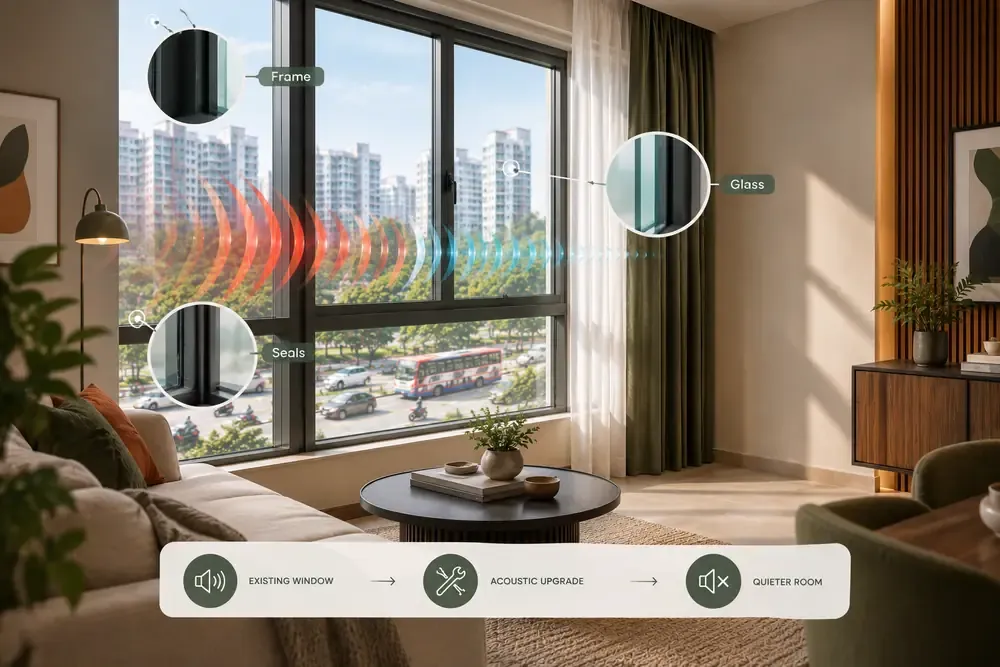
When people think about soundproofing windows, they often focus immediately on glass.
But the surrounding areas can be just as important to investigate.
Imagine upgrading the glazing while leaving a gap around the frame.
Sound can still pass through that opening.
The same principle applies to a window that does not close properly.
This is why an existing-window assessment should examine the whole installation rather than only asking whether the glass can be upgraded.
How to Check Your Existing Window Before an Acoustic Upgrade
Start with a simple visual and practical inspection.
Close the window fully and listen near the edges.
Check whether you can see daylight through any unusual gap.
Look at the rubber seals for visible deterioration.
Operate the handle or locking mechanism and check whether the window closes firmly.
For Sliding Windows
Inspect the tracks and the contact points between the moving panels and frame.
For Casement Windows
Check the closing mechanism and the condition of the perimeter seals.
These observations do not identify the complete acoustic performance, but they can help highlight areas that deserve professional assessment.
What If the Window Is Old?
An older window may have several issues at the same time.
The glass may provide limited acoustic separation.
The seals may have deteriorated.
The frame may have loosened or become misaligned.
The locking mechanism may not pull the window tightly against its seals.
In this situation, replacing only one component may not produce the expected result.
An inspection can help determine whether a targeted repair or a more comprehensive acoustic upgrade makes sense.
Can You Keep the Original HDB Window?
In some cases, homeowners may want to retain the existing window and improve its acoustic performance rather than replace the complete installation.
This can be relevant when the frame is still suitable and the goal is to minimize major changes to the existing window.
However, the proposed work needs to be assessed against the applicable HDB requirements.
HDB states that window installation and replacement work in HDB flats must be carried out by BCA-approved window contractors listed with HDB. HDB also provides specific requirements for window types and replacement situations.
Before carrying out any modification, check the current HDB guidelines and confirm what work is permitted for your specific flat.
Soundproofing Existing Windows for Traffic Noise
Traffic noise is one of the reasons homeowners look for acoustic window improvements.
A road-facing room may be affected by:
• Cars
• Motorcycles
• Buses
• Heavy vehicles
• Stop-and-go traffic
Different sounds have different characteristics, so the ideal acoustic configuration can vary.
For example, the solution for a bedroom near a busy road may not be identical to the solution for an office affected mainly by general outdoor conversation.
This is why the actual noise problem should be understood before recommending a particular configuration.
Soundproofing Existing Windows for an HDB Bedroom
Bedrooms often make window noise more noticeable because the room may be occupied when outdoor activity is still taking place.
If traffic noise is disturbing the room, start by determining whether the window is the main sound pathway.
Check the glass.
Check the seals.
Check the frame.
Check whether the window closes tightly.
Then consider whether an acoustic upgrade, secondary glazing or another approach is appropriate.
The objective should be to improve the weakest part of the existing system rather than automatically replacing everything.
What If the Noise Is Coming Through the Wall?
This is an important point.
A window upgrade can only address sound that is entering through or around the window system.
Noise may also travel through:
• Walls
• Doors
• Ventilation openings
• Another window
• Ceiling or floor structures
If the window is not the main sound pathway, investing heavily in the window may produce less improvement than expected.
An assessment of the room can help establish whether the window is actually the main problem.
What Should You Ask a Soundproofing Contractor?
Before approving an acoustic retrofit, ask:
Is the Existing Window Suitable for an Upgrade?
Ask whether the current frame, glass and hardware can accommodate the proposed work.
What Is the Main Source of the Noise?
Clarify whether the main problem is traffic, motorcycles, buses, MRT noise, construction or general outdoor activity.
Can the Existing Glass Be Upgraded?
Ask whether laminated, acoustic laminated or another glazing configuration is suitable.
Would Secondary Glazing Be Appropriate?
Ask whether the available space and existing window configuration make secondary glazing practical.
Is the Quoted Acoustic Performance for the Glass or the Complete System?
This distinction is useful when comparing different proposals.
Does the Proposed Work Comply With HDB Requirements?
Confirm the applicable requirements before work begins.
AM Glass Solution for Acoustic Glass Solutions
For projects where external noise is affecting a residential or commercial space, AM Glass Solution provides soundproof glass solutions in Singapore, including acoustic glass options for homes and other applications.
You can explore soundproof glass doors and partitions to understand the acoustic glass services available.
For an existing-window project, the practical starting point is to assess the current glass, frame and seals before deciding whether an upgrade or a more complete solution is appropriate.

Final Thoughts
Soundproofing existing windows without replacing them can be possible when the current window is suitable for an upgrade.
The first step is to understand why the room is noisy.
A gap around the frame may require a very different response from glazing that provides limited acoustic separation.
Depending on the existing installation, options can include improving seals, correcting window alignment, upgrading suitable glazing or considering secondary glazing.
For HDB flats, the proposed work must also be considered against the applicable window requirements. HDB advises homeowners to engage BCA-approved window contractors listed with HDB for window retrofit, repair and replacement work.
Rather than assuming that replacing the entire window is the only solution, inspect the existing system first. That can help determine whether a targeted acoustic improvement is possible and whether it is appropriate for the property.
Frequently Asked Questions
Can I Soundproof My Existing Windows Without Replacing Them?
In some cases, yes. Depending on the existing system, options may include improving seals, repairing the window, upgrading suitable glazing or adding secondary glazing.
What Is the Easiest Way to Reduce Noise From Existing Windows?
Start by checking for gaps, worn seals and windows that do not close tightly. The correct solution depends on the actual weakness.
Can Window Seals Reduce Traffic Noise?
Improving damaged or poorly fitted seals may reduce sound leakage around the window, but seals alone cannot address every acoustic problem.
Can I Add Acoustic Glass to My Existing Window?
This depends on the frame, glazing method, available space and other characteristics of the existing window.
Does Window Film Soundproof Existing Glass?
Not necessarily. A film should not automatically be treated as an acoustic solution. Its purpose and tested performance need to be considered.
H3: Is Secondary Glazing Suitable for HDB Flats?
It may be suitable in some situations, but the existing window, available space and applicable HDB requirements should be assessed before installation.
Can Curtains Completely Block Traffic Noise?
No. Curtains can contribute to room treatment but do not replace the acoustic function of a properly designed window system.
Should I Replace My HDB Window or Upgrade It?
That depends on the condition of the existing frame, glass and seals, the noise source and the type of upgrade possible.
How Do I Know Where the Noise Is Entering?
Listen and inspect around the window, especially the frame, seals and joints. A professional assessment can help identify the main sound pathway.