How to Choose Soundproof Windows for an HDB Flat?
Living in an HDB flat near a busy road, bus route, MRT line or active neighborhood can expose your home to unwanted outdoor noise.
Traffic, motorcycles, buses and other sounds can become particularly noticeable in bedrooms and living rooms. Closing the windows may reduce some of the noise, but the result depends heavily on the condition and design of the existing window.
For homeowners considering soundproof windows for an HDB flat in Singapore, the important question is not simply which glass is thickest. The glass, frame, seals, window type, installation and the source of the noise all need to be considered together.
It is also important to understand the requirements that apply to HDB window works before planning a replacement.
This guide explains what to look at when choosing an acoustic window solution for an HDB flat and what questions to ask before starting the work.
Why HDB Windows Matter for Noise Reduction?
Windows form part of the boundary between your home and the outdoor environment.
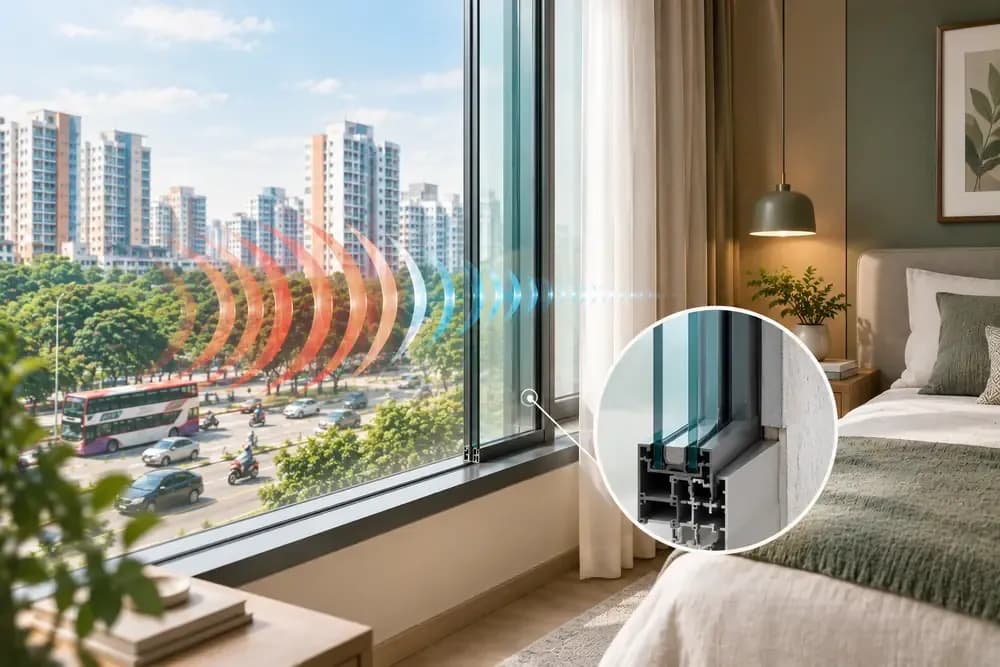
When an HDB flat faces a busy road, the window may be directly exposed to traffic noise. If the existing glazing provides limited acoustic separation, or if there are gaps around the frame and seals, outdoor noise may remain noticeable even when the window is closed.
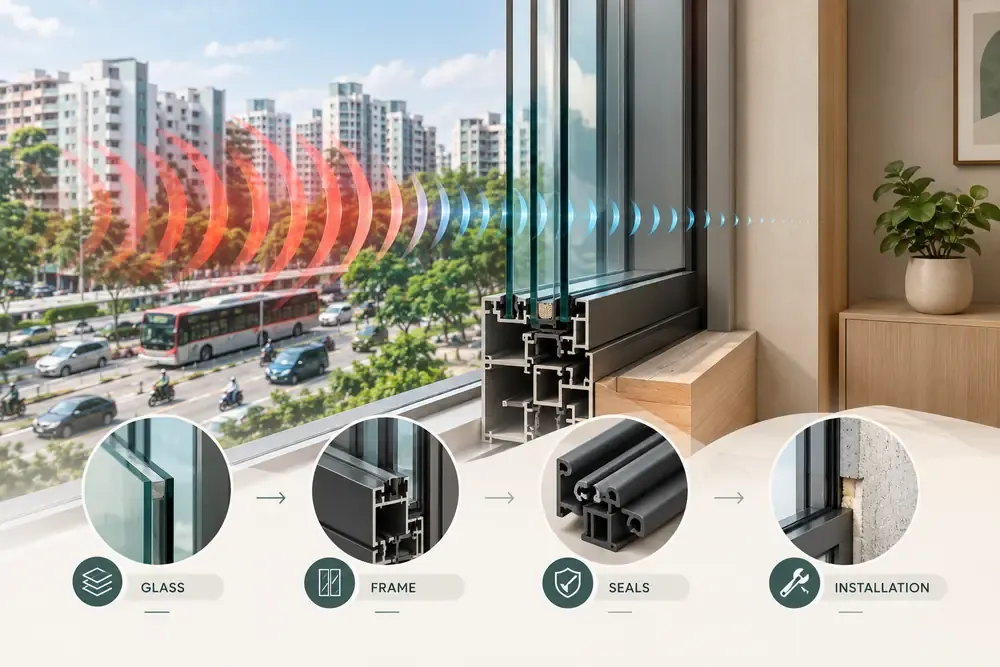
A useful way to think about acoustic performance is as a complete system.
The main elements include:
Glass
Frame
Seals and joints
Window opening mechanism
Installation
The condition of each element can influence how much sound reaches the room.
For this reason, simply replacing one component without examining the others may not address the main cause of the noise.
Start by Identifying the Noise Source
Before choosing soundproof windows for an HDB flat in Singapore, first identify the type of noise affecting the room.
Traffic noise
Road traffic can include cars, buses, motorcycles and heavy vehicles. These sources do not all produce the same type of sound, so a glazing system should be selected according to the actual problem rather than a general assumption about traffic noise.
MRT and transport noise
If your flat is located near a transport route, recurring noise may enter through the window area. The appropriate acoustic approach depends on the characteristics of the noise and the existing window system.
Neighborhood noise
Voices, outdoor activity and other general urban sounds can also become noticeable. In these situations, the window should be assessed as a complete system.
Construction noise
Construction activity can involve different types of airborne and impact noise. Improving the window may help when it is a significant sound pathway, but noise can also travel through walls and other parts of the building.
The first question should therefore be:
Where is the noise entering the room?
That can provide a more useful starting point than immediately choosing a particular glass thickness.
Inspect the Existing HDB Window
Before deciding to replace the entire window, inspect the existing installation.
Look for signs such as:
• Worn or damaged seals
• Gaps around the frame
• A window that does not close tightly
• Loose or damaged hardware
• Cracked or damaged glass
• Poor alignment
• Noticeable noise around the window area
These signs do not automatically mean that the entire window needs to be replaced.
Depending on the condition, the appropriate approach could involve repair, an upgrade to the glazing or seals, or replacement of the complete window system.
A proper assessment can help identify which part of the installation is contributing most to the problem.
Does Thicker Glass Automatically Mean Better Soundproofing?
Not necessarily.
Glass thickness is only one part of an acoustic window system.
Laminated glass consists of multiple glass layers bonded with an interlayer. Acoustic laminated glass can be considered where improved sound attenuation is required.
However, the final result is also influenced by the surrounding frame, seals, joints and installation.
For example, a high-performing glass panel may still have limited overall benefit if there are gaps around the frame.
Instead of asking only:
“What glazing configuration is suitable for this HDB flat and this particular noise problem?”
That distinction can lead to a more practical solution.
Acoustic Laminated Glass for HDB Windows
Acoustic laminated glass is one option that homeowners can consider when external noise is a concern.
The glass uses an interlayer between the glass layers, which helps damp sound transmission.
This type of glazing can be useful for situations where homeowners want to improve acoustic separation while retaining the visual characteristics of a glass window.
However, the glass should not be evaluated separately from the rest of the window.
The frame, seals and installation still matter.
The right specification depends on the property, the size and configuration of the window, the type of noise and the desired level of acoustic improvement.
What About Double-Glazed Windows?
Double-glazed windows use two panes of glass separated by a cavity.
This creates a different acoustic arrangement compared with a single pane, and a properly designed double-glazed system can contribute to improved sound insulation.
However, double glazing should not automatically be treated as the answer for every HDB flat.
Its performance can be affected by:
• Glass combination
• Cavity spacing
• Frame construction
• Sealing
• Installation
• Type of noise
In some applications, laminated glass and multiple glazing layers may be considered together.
The important point is to select the complete configuration based on the property rather than assuming that two panes will always provide the same result.
Why Window Frames Matter
The frame is an important part of any window system.
Imagine upgrading the glass but leaving gaps around the frame. Sound may still pass through those openings.
When assessing an existing HDB window, look at:
• Frame condition
• Joints
• Hardware
• Alignment
• Closing pressure
• Areas where the frame meets the wall
A good acoustic solution should take the complete installation into account.
Do Window Seals Affect Soundproofing?
Yes.
Seals help close the gaps between moving window components and the frame. When seals become worn, damaged or poorly fitted, small openings can allow sound to enter the room.
Check whether:
• The window closes tightly
• The seals are visibly worn
• There are gaps around the edges
• The joints appear damaged
• The window moves or rattles when closed
Replacing or improving seals may be relevant in some situations, but the appropriate work depends on the condition of the existing window.
Should You Repair, Retrofit or Replace the Window?
There are three common approaches to consider.
Repair
If the main problem is a damaged component, worn seal or another maintenance issue, repair may be appropriate.
Upgrade or retrofit
Where the existing system is in suitable condition, an acoustic improvement may be possible without replacing every component.
Complete replacement
If the glass, frame or overall installation is unsuitable, a complete replacement may need to be considered.
The decision should be based on the actual condition of the window.
Replacing everything may not be necessary in every case, while a glass-only upgrade may not be enough when the frame or seals are the main weakness.
HDB Requirements for Window Replacement
HDB has specific requirements for window installation and replacement.
HDB states that installation or replacement of windows in HDB flats must be carried out by a BCA-approved window contractor listed in HDB's directory. HDB also states that a renovation permit is required for window replacement work. Certain window replacement situations have additional requirements concerning the window type, dimensions, colour scheme and safety provisions. Housing & Development Board
This is particularly important when planning an acoustic upgrade because the desired window design must still comply with the applicable HDB requirements.
Can Every HDB Window Be Replaced With Any Acoustic Window?
No.
HDB window works are subject to specific rules, and certain window configurations have restrictions.
For example, HDB states that replacement windows in relevant HDB flats must follow requirements relating to the original window's color scheme, proportion and type. There are also specific provisions for certain full-height and safety-barrier-related window situations.
This means homeowners should not choose an acoustic window solely based on its advertised performance.
The proposed system also needs to be suitable for the existing HDB flat and the applicable regulations.
How to Choose the Right Soundproof Window Configuration
Once the noise source and existing window have been assessed, compare the available options based on the complete system.
Glass type
Consider whether standard glass, laminated glass, acoustic laminated glass or a combination of glazing layers is appropriate.
Frame
Check the construction and condition of the existing frame and whether it can provide an effective sealed installation.
Seals
Look for worn or damaged seals that may allow sound to pass through.
Window type
The opening mechanism can affect how the window closes and seals. The proposed replacement should also comply with the relevant HDB requirements.
Installation
Poor alignment, gaps around the frame or inadequate sealing can affect the performance of the finished window.
Noise characteristics
Traffic, motorcycles, MRT noise and general outdoor activity can have different characteristics, so the glazing configuration should reflect the actual problem.
How Much Noise Reduction Can You Expect?
There is no single noise-reduction figure that can be guaranteed for every HDB flat.
The final improvement can depend on:
• Existing window condition
• Glass specification
• Window configuration
• Frame design
• Seals
• Installation
• Distance from the noise source
• Type and frequency of the noise
• Other possible sound paths
This is why homeowners should be careful with simple claims such as a fixed percentage of noise reduction.
A more useful approach is to identify the existing weakness and understand what the proposed window system is designed to improve.
What If Traffic Noise Still Enters After a Window Upgrade?
A window is only one possible pathway for sound.
Noise may also travel through:
• Walls
• Doors
• Ventilation openings
• Other windows
• Ceiling or floor structures
• Gaps around other building elements
This means even a well-designed acoustic window may not make a room completely silent.
The objective should be to reduce sound transmission through the window system as part of a practical overall solution.
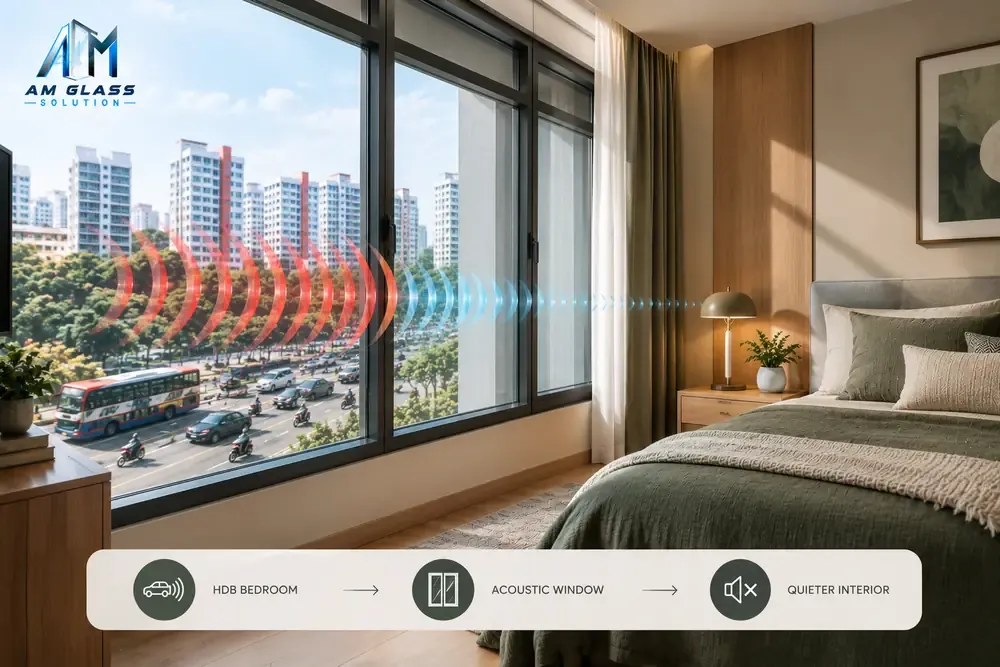
Soundproof Windows for an HDB Bedroom
Bedrooms can be particularly sensitive to traffic and transport noise.
If the bedroom faces a busy road, start by checking whether the window is the main route through which the sound is entering.
Look at the glass, frame, seals and closing mechanism.
Then determine whether the existing system can be improved or whether replacement is more appropriate.
For a bedroom, the right solution should balance acoustic performance with the practical requirements of the HDB flat and the way the room is used.
Questions to Ask a Window Contractor
Before proceeding with soundproof windows for an HDB flat in Singapore, ask the contractor:
What is the main source of the noise?
Is the existing frame suitable for an upgrade?
Can the current window be repaired or retrofitted?
What type of glass is being proposed?
Is it standard, laminated, acoustic laminated or double glazed?
How will the frame and seals be handled?
Is the acoustic performance referring to the glass alone or the complete window system?
Does the proposed work comply with the current HDB requirements?
Who will handle the required permit and documentation?
These questions can help you compare quotations based on the actual solution rather than simply comparing glass thickness or price.
Soundproof Windows vs Soundproof Glass Partitions
Windows and glass partitions serve different purposes.
A window separates the home from the outdoor environment, while a glass partition separates two indoor areas.
For HDB homes, the focus is usually on reducing unwanted outdoor noise entering through the window.
For offices, meeting rooms and commercial spaces, acoustic glass partitions can be used when better separation between indoor areas is required while maintaining a glass-based design.
You can learn more about soundproof glass doors and partitions for commercial and residential acoustic applications.
How AM Glass Solution Can Help
AM Glass Solution provides soundproof glass solutions in Singapore for residential and commercial applications, including HDB homes, offices, meeting rooms, studios and other spaces.
Its acoustic glass service includes options such as laminated acoustic glass and single- or double-glazed configurations, depending on the project requirements.
For an HDB project affected by external noise, the practical starting point is to assess the existing installation and determine whether the main issue is the glazing, frame, seals or overall window system.
Final Thoughts
Choosing soundproof windows for an HDB flat in Singapore is not simply about selecting thicker glass.
The type of noise, existing glazing, frame, seals, opening mechanism and installation all contribute to the final result.
HDB requirements also need to be considered before any window replacement work begins. Using the appropriate approved contractor and following the applicable requirements helps ensure that the acoustic upgrade is planned within the rules for the flat.
A practical approach is to inspect the existing window first, identify where the noise is entering and then compare repair, retrofit and replacement options.
The right acoustic window is the one that fits the actual noise problem, the existing HDB installation and the requirements of the home.
Frequently Asked Questions
What are the best soundproof windows for an HDB flat in Singapore?
There is no single configuration that suits every HDB flat. The appropriate choice depends on the noise source, existing window, glass, frame, seals and installation.
Can I replace my HDB windows with acoustic glass?
Window replacement is subject to HDB requirements and must be carried out by the appropriate BCA-approved window contractor listed with HDB.
Is acoustic laminated glass suitable for traffic noise?
It can be considered where improved sound attenuation is required, although the complete window system also needs to be assessed.
Is double glazing suitable for an HDB flat?
It may be suitable in some applications, but the configuration must be assessed against the existing window and applicable HDB requirements.
Do window seals affect soundproofing?
Yes. Gaps or worn seals can create pathways through which outdoor sound can enter.
Should I replace the entire window?
Not always. Depending on the existing condition, repair, retrofit or complete replacement may be considered.
Can soundproof windows completely block traffic noise?
No. Sound can also travel through walls, doors, ventilation openings and other parts of the building.
What should I check before installing soundproof windows in an HDB flat?
Check the noise source, existing glass, frame, seals, window type and HDB requirements before choosing the window configuration.